

Tobias Rost wechselt nach gut zehn Jahren bei der Emons Spedition seinen Arbeitgeber und ist ab Mai 2020 sales development manager bei der Deutschen Transfesa.
DE 12 für InfraServ Logistics
Nachdem zuletzt 2013 mit einer BASF-Lok eine DE 12 der Vossloh Locomotives das Werk verlassen hatte, wird in Kürze eine Maschine dieses Typs ausgeliefert: 92 80 4125 006-1 D-VL geht an die Infraserv Logistics GmbH in Frankfurt am Main.
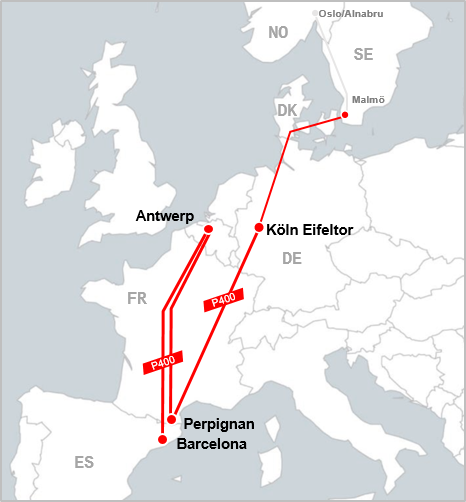
Köln – Perpignan reaktiviert
Nach dem Corona-Virus-bedingten Stop reaktiviert Hupac die Linie Köln – Perpignan. Erste Abfahrt war am 27.04.2020, angeboten werden zunächst zwei Rundläufe. Es soll ein Ausbau auf fünf Rundläufe/Woche erfolgen. Die mit Profil P400 nutzbare Verbindung verkehrte erstmals am 16.03.2020 ab Köln und bietet Durchbindungsmöglichkeiten von Nordspanien / Pyrenäen bis Skandinavien.
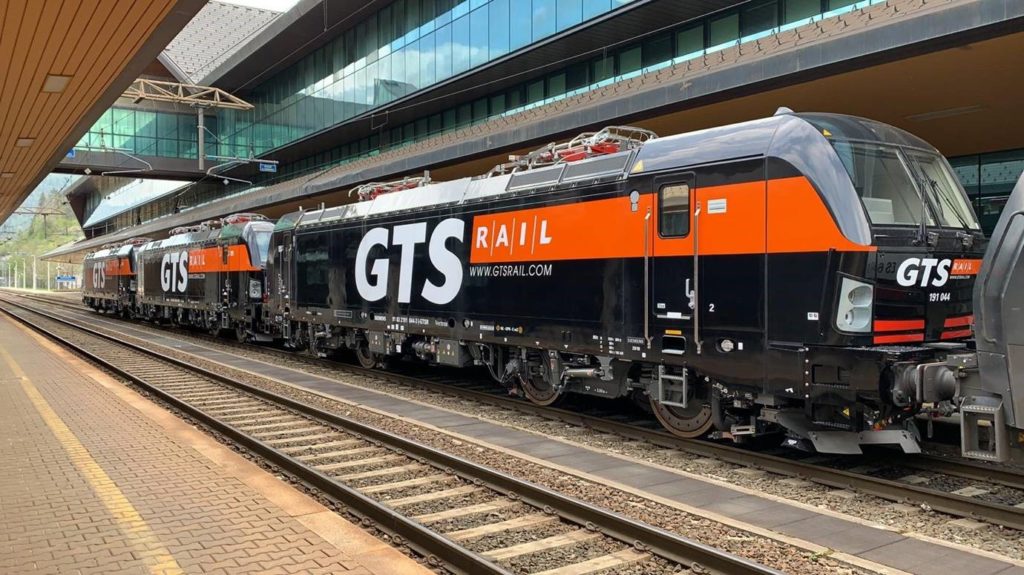
GTS Rail-Vectron in Italy
Am 28.04.2020 reisten die drei Siemens Vectron DC für GTS Rail via Tarvisio in Italien ein. Die Fahrzeuge 191 043 bis 045 waren urspünglich 2018 und 2019 für Mitsui Rail Capital Europe (MRCE) gebaut worden. Der Lokvermieter hatte die drei Wechselstromloks aber gegen zwei Vectron MS A10 (Länderpaket DE, AT, HU, PL, CZ, SK, RO, NL) mit Liefertermin Oktober 2020 gewandelt.
Regular container train service established between Cologne and China
For weeks, the world’s second-largest economy was virtually at a standstill due to the coronavirus crisis. China has since restarted large parts of its industrial sector and resumed international trade. This is one of the reasons why a regular container train service is now set to be established between several major Chinese cities and Cologne.
This weekend, the first regular scheduled train, designated DBO-W155, arrived at CTS Container-Terminal GmbH in the Port of Cologne-Niehl; the 22 railcars arrived on time at the trimodal transshipment terminal operated by the HGK affiliate. The containers, carrying all kinds of goods, are primarily destined for companies in Cologne and the surrounding area. However, containers can also be forwarded via regular train connections from Cologne to destinations in the greater Milan area, as well as to Valencia, Rotterdam, Antwerp, Bremerhaven, Hamburg, Aschaffenburg, and Schweinfurt. On Saturday evening, the train departed Cologne and headed back toward China.
“Especially in times of crisis like the COVID-19 pandemic, the supply of goods to the population must be guaranteed. This also includes goods produced in China. Conversely, goods manufactured in the Rhineland are in demand in China. So it’s only logical to launch this connection,” say CTS Managing Director Oliver Grossman and Oliver Haas, CTS General Manager of Business Development.
Once a week, the train connects Cologne with major Chinese cities such as Chongqing, Xiamen, and Xi’an. Within China, the freight can then be redistributed to a total of 120 additional destinations. The transit time for the containers ranges from about 13 to 19 days, depending on the destination. The price is comparable to that of ocean freight, but the goods reach their destination in about one-third of the time.
Häfen und Güterverkehr Köln AG Press Office Scheidtweilerstraße 4 50933 Cologne
0221 390-1190 0221 390-1191 presse@hgk.de www.hgk.de
The Zug product is provided by DBO Bahnoperator GmbH and the China-based company BTE (Beijing Trans Eurasia). The two companies operate at a total of eight locations in China and Europe and employ a total of 200 people. With more than 500 trains per year, the consortium is one of the market leaders in rail container transport to and from China.
Rail connection also attractive for shipments to Eastern Europe
Thanks in part to the Chinese freight railway CRCT (China Railway Container Transport), transit times within China can be significantly reduced, which benefits the local export industry. The connection is supported by the Russian, Kazakh, and Belarusian railways. Along this route, containers can therefore be booked from Cologne to Poland, for example. Within Europe, DBO utilizes large and medium-sized private railways to guarantee the best possible transport service. RheinCargo handles the so-called “last mile” to the Port of Niehl.
The neska Group, a subsidiary of HGK AG that holds a 62.5 percent stake in CTS Container-Terminal GmbH, views the new connection as a model for others to follow. “In the intermodal business, neska operates six modern, trimodal container terminals that are ideally located in metropolitan areas and are intelligently connected to one another and to seaports via their own inland waterway vessels and rail systems. In addition to maritime transport, we also see enormous potential in continental transport,” said neska Managing Director Stefan Hütten.
Beck Is Expected to Revamp DB Cargo's Reputation
(Berlin/Mainz, April 27, 2020)  From yellow to red: DB Cargo strengthens its marketing team with Dr. Martell Beck. The former head of marketing at Berliner Verkehrsbetriebe (BVG) will take over the newly created “Marketing and Transport Policy” division on June 1, 2020. He will report directly to Dr. Sigrid Nikutta, DB Executive Board Member for Freight Transport and CEO of DB Cargo.

“Freight transport is more important today than ever before! It’s green, reliable, and operates across borders. We want to communicate this much more actively to the public and our customers in the future. DB Cargo’s reputation is one of the keys to our future success. I’m delighted that we’re gaining such a competent addition to our team in Dr. Martell Beck,” said Dr. Sigrid Nikutta.

With Dr. Martell Beck, DB Cargo is welcoming a proven marketing expert: After holding positions at Deutsche Bahn and Stuttgarter Straßenbahn AG, he has headed the “Marketing and Sales” division at BVG since 2012. With the “Because We Love You” image campaign, the doctor of economics completely realigned BVG’s public image and digital communications.
CRRC Is Authorized to Acquire Vossloh's Shunting Locomotive Division
News item dated: April 27, 2020
Das Bundeskartellamt hat heute den Erwerb der Vossloh Locomotives GmbH, Kiel, durch CRRC Zhuzhou Locomotives Co., Ltd., Zhuzhou (Volksrepublik China) freigegeben.
Andreas Mundt, Präsident des Bundeskartellamtes: „In dem Fusionsfall
CRRC/Vossloh Locomotives haben wir alle Besonderheiten, die mit der
Übernahme eines europäischen Unternehmens durch ein chinesisches
Staatsunternehmen einhergehen, sehr gründlich geprüft. CRRC übernimmt
mit Vossloh einen wichtigen Hersteller von Rangierlokomotiven in Europa.
Bei der Bewertung der Fusion sind die Möglichkeiten staatlicher
Subventionen, die Verfüg-barkeit von technischen und finanziellen
Mitteln und die strategischen Vorteile aus anderen
Unternehmensbeteiligungen in die wettbewerbliche Prognose eingeflossen.
Wir haben uns auch mit der Gefahr von Niedrigpreis- und
Dumpingstrategien und den Kostenvorteilen aufgrund des staatlich
geförderten Engagements von CRRC in vielen anderen Märkten
auseinandergesetzt. CRRC spielt in chinesischen Industriestrategien eine
wichtige Rolle. Außerdem kann CRRC künftig von dem Know-how des
etablierten Herstellers Vossloh bei den aufwändigen Zulassungsverfahren
für Rangierlokomotiven profitieren. Am En-de haben unsere durchaus
vorhandenen Bedenken aber keine Untersagung des Vorhabens begründen
können. Vossloh Locomotives hat in den vergangenen Jahren deutlich an
Wettbewerbsfähigkeit eingebüßt, zugleich sind neue Wettbewerber mit
innovativen Antriebstechniken in den Markt eingetreten. Neben Vossloh
sind inzwischen mehrere starke Wettbewerber tätig. CRRC spielt auf dem
europäischen Markt hingegen bisher nur eine untergeordnete Rolle.“
Vossloh Locomotives ist der Marktführer für die Herstellung von
Rangierlokomotiven mit Dieselantrieb im Europäischen Wirtschaftsraum und
der Schweiz. Das Unternehmen ist eine Tochtergesellschaft der Vossloh AG. Vossloh Locomotives beschäftigt etwa 500 Mitarbeiter und erzielte Umsätze von mehr als 100 Mio. Euro im Jahr 2019.
CRCC ist eine Tochtergesellschaft der China Railway Rolling Stock Corporation, Ltd.
und ist der weltweit größte Hersteller von Schienenfahrzeugen, dessen
Aktivitäten bisher stark auf China konzentriert sind. Die CRRC-Gruppe
beschäftigt mehr als 150.000 Mitarbeiter und betreibt zahlreiche
Fabriken in China und anderen Ländern. Im Jahr 2018 wurden damit Umsätze
von 27,5 Mrd. Euro erzielt.
Die Prüfung des Zusammenschlussvorhabens wies einige Besonderheiten auf.
Durch die starke Marktstellung von Vossloh einerseits und die bislang
sehr schwache Stellung von CRRC auf dem europäischen Markt andererseits,
erlangte insbesondere die Frage Bedeutung, wie die Beteiligung
chinesischer Staatsunternehmen in der Fusionskontrolle zu bewerten ist.
Berücksichtigung fanden auch die weitreichenden technologischen
Ressourcen von CRRC. Wie die Befragung des Bundeskartellamtes gezeigt
hat, erwarten europäische Wettbewerber infolge der Übernahme künftig
Wettbewerbsverzerrungen.
Das Vorhaben war letztlich freizugeben. Vossloh Locomotives hat in den
vergangenen Jahren deutlich an Wettbewerbsfähigkeit verloren. Die
Muttergesellschaft Vossloh AG hatte bereits 2014
entschieden, das Unternehmen zu verkaufen. Seitdem sind etablierte
Bahntechnik-Hersteller wie Alstom, Stadler und Toshiba mit innovativen
Antriebstechniken in den europäischen Markt eingetreten und bieten jetzt
ebenfalls Rangierlokomotiven an. In diesem Fahrzeugmarkt findet derzeit
ein Technologiewechsel hin zu Hybrid-Antrieben sowie sog.
„Dual-Mode-Lokomotiven“ statt, die sowohl mit elektrischer Oberleitung
als auch mit Dieselantrieb fahren können. Das Zielunternehmen Vossloh
Locomotives ist mit solchen Lokomotiven bislang nicht vertreten und
dadurch in einen wettbewerblichen Rückstand geraten.
CRRC bemüht sich seit Jahren um den Eintritt in die europäischen Märkte
für Schienenfahrzeuge. Bislang hat das Unternehmen in Europa allerdings
nur geringe Erfolge erzielen können, darunter die Lieferung einiger
Rangierlokomotiven an die Deutsche Bahn für die S-Bahnen in Hamburg und
Berlin sowie an die ungarische ÖBB-Tochter Rail Cargo Hungaria. CRRC ist
daher in Europa bisher noch kein enger Wettbewerber von Vossloh.
Dazu Andreas Mundt: „Auf der Grundlage unserer Ermittlungen war
auszuschließen, dass die Übernahme zu einer erheblichen Beeinträchtigung
des Wettbewerbs auf dem Markt für Rangierlokomotiven in Europa führen
würde. Obwohl es sich bei CRRC um ein durch den chinesischen Staat stark
protegiertes Unternehmen handelt, das gleich in zwei
Industriestrategien – „Made in China 2025“ und „Neue Seidenstraße“ –
eine wichtige Rolle spielt, zeigt der Fall, dass chinesische
Staatsunternehmen zwar mit großer wirtschaftlicher Kraft in Märkte
eintreten, dass das aber nicht generell mit einer Bedrohung für den
Wettbewerb gleichgesetzt werden kann.“
Cargo Motion: Workshop near Ostrava
On April 26, 2020, Cargo Motion reactivated a locomotive repair shop in Polanka nad Odrou, near Ostrava. The facility had not been used for 25 years and is part of a complex formerly used for fruit transshipment.
RCG verbindet China und Budapest
Arrival of a very important train with an even more important load! 😷 Today, RCG board member, Imre Kovács welcomed our first Jinan-Budapest train, fully loaded with masks and disinfectants – which came much faster than by ship and much cheaper than by air! This train was the first train of our 3 new Eurasia #TransFER connections, which we have launched as an immediate reaction to the Corona crisis due to a higher demand for direct #Eurasia connections with short transit times.
https://www.linkedin.com/posts/cfoerst_transfer-corona-eurasia-activity-6660537977191583746-R-77
SEL 181 215 für Nordliner
h

Zum Verwiegren Neustelitz, HU 01.05.2020